
How to Find Who Owns an Ohio County Property
An address-based owner search starts with the Assessor. That parcel card ties a street to a tax-roll name. Record the Current Owner field, the mailing address, the district, map and parcel, the legal description, and the deed book and page. Then pull the Clerk's latest deed. Its grantee shows who received the recorded interest in the land. A solid answer rests on the parcel and the instrument, not just a name on a web result.
- Search the situs address or owner name in the Ohio County Assessor Property Record Search.
- Copy the district, map/parcel and deed book/page so later results refer to the same property.
- Check the Clerk index for the newest recorded deed and read the grantee and legal description.
- If an entity is named, verify its filed name and status through the WV Secretary of State business search.
- Use GIS only to confirm that the address and parcel shape fit the property under review.
Keep the tax-roll lead and the recorded deed separate. If the Assessor name and the deed grantee differ, record both names, compare dates, and check whether a more recent deed exists. Clerk summaries update as instruments are recorded. Document images, however, generally appear after about 28 business hours.
The Ohio County Current Owner Field Is a Tax-Roll Lead
The Assessor card labels its owner entry Current Owner. The Clerk's Find a Deed page adds a caution. That name is not updated on a regular schedule. It can still identify a former owner. The gap matters most after a closing. A deed can be recorded before the assessment card changes. A current-sounding label proves nothing.
Keep the tax-roll date and the search date separate. Keep the deed recording date and the image date separate too. Do not merge them. When a deed summary appears before its image, return after the stated delay. You can also contact the Clerk. The newest recorded deed is the better source for the grantee. The Assessor still anchors the parcel and its tax identifiers.
When an Ohio County Property Is Held by an Entity
A deed can name an LLC, corporation, trustee, or estate. It can also name another fiduciary rather than a person. Search the exact entity name in the WV Secretary of State Business Organization Search. Its filing shows organization details, status, and a registered agent. You may also see listed officers or managers. Treat the state entry as an identity aid. The County Clerk's instrument records the land transfer.
Older Ohio County grantor and grantee indexes include a separate Corps. & Firms section. A firm may need a different index than a person. Estate files can hold a fiduciary deed, an appraisement, or a settlement. A will merely lodged after a death is indexed. It is not viewable until probated, per the county. Follow the representative's recorded authority in fiduciary transfers.
The state lookup runs through the WV Secretary of State Business Organization Search.
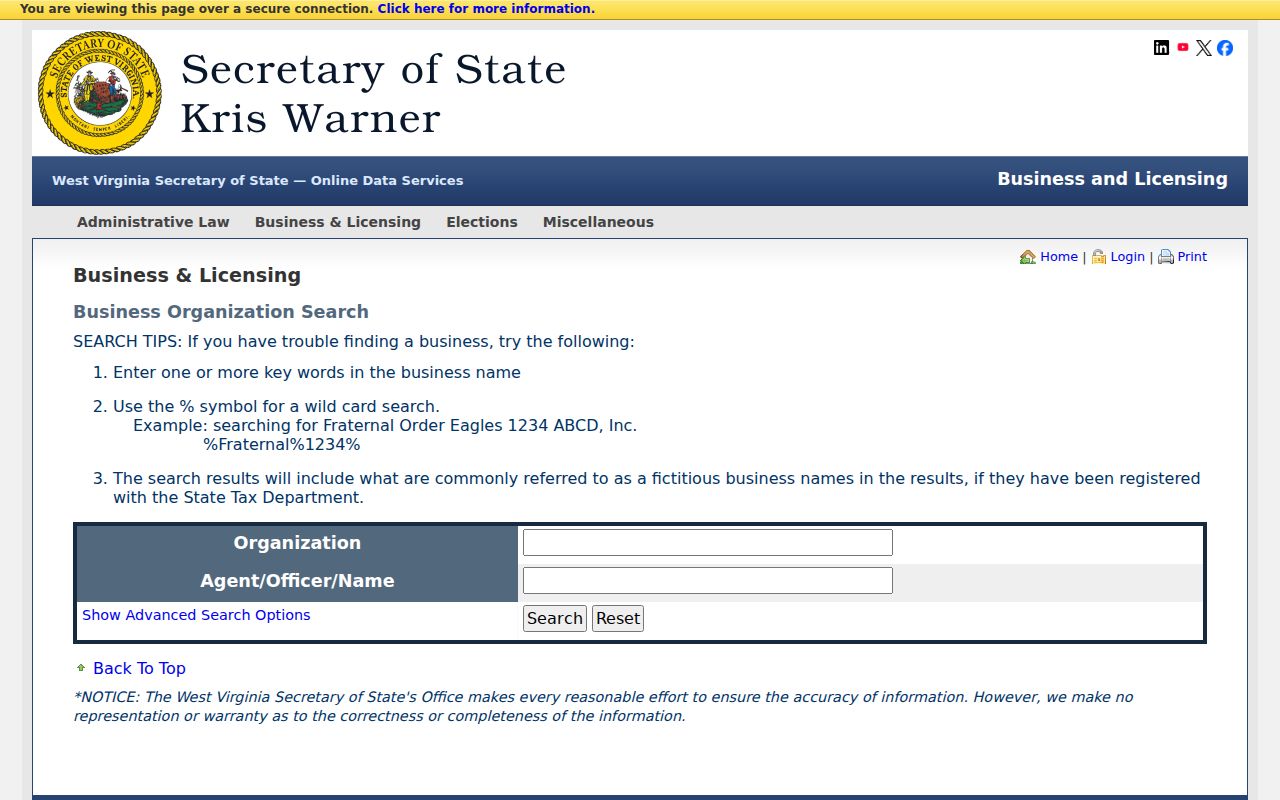
Match the entity's exact wording to the deed. Note any change of status or name before linking records together.
Compare Ohio County Owner Sources by Their Job
No single public source answers every ownership question. The Assessor holds the tax parcel and Current Owner field. The Clerk records the grantee and the instrument. The statewide map may repeat an owner name beside the parcel geometry. Before treating results as one property, check each for the same district, map and parcel. Also confirm the legal description matches.
| Source | Owner Info It Gives | Access |
|---|---|---|
| Assessor tax roll | Current Owner, mailing and street address, parcel key and deed reference. | Free public search; some building links may ask for login. |
| Clerk deed index | Grantor, grantee, instrument type, date, book/page and available image. | Free index; online printing is paid. |
| Secretary of State | Entity name, organization/status and filed contact or manager details. | Free business organization search. |
| WV Property Viewer | Owner name, address, GIS ID and highlighted polygon. | Free reference map and search. |
Owner of record means a name on a public parcel or conveyance record. It does not name the people inside the building. A mailing address can differ from the situs address because tax bills travel to a separate destination. The Assessor card lists no SSN field. So do not assume every sensitive field is public. West Virginia's Safe at Home program shields some addresses. That is one more reason not to infer anyone's residence from an owner name.
Use a Parcel Key to Resolve Same-Name Owner Results
An owner-name search can return several records for one person, namesakes, or similar entities. Search LAST NAME FIRST NAME without a comma, as the county form directs. Type it that way. Then compare each card's street address, mailing address, and district, map and parcel. A partial spelling helps. But it widens the results.
Start with an address when that is your clue, carry the parcel key forward, and never let a bare name join a tax card to a deed. For a company, search the entity name. A name match alone proves little.
Confirm the Owner Name Against the Recorded Ohio County Deed
Start with the Assessor's deed book and page, or the parcel identifier. Take that reference into the Clerk's index. Inside Document Inquiry, look closely at the party role and document type. The receiving party may be listed as a grantee or a receiver. Then open the full deed. Its vesting language, legal description, prior-conveyance reference, signatures and exhibits carry the real terms. The index summary only labels the instrument.
Older transfers call for a different route. Use the historical Vault and the grantor or grantee books for the period. The online historical index reaches back to 1777. The Clerk keeps separate date ranges plus a Corps. & Firms index. Searching only the modern portal by person name cannot prove that no earlier conveyance exists.
Timing questions about the present owner of record are handled elsewhere. See the Ohio County current owner record guide.
Limits of a Who Owns This Property Search in Ohio County
A tax-roll name or deed grantee has limits. It does not say who occupies a building. It cannot prove title is free of all claims. Nor can it rule out an unrecorded interest. Treat a mailing address as a tax-mail field only, never an invitation to contact someone. Owner information serves property research, civic purposes and due diligence; it should never be used to target a person.
To match an address, compare the Assessor's street address with the parcel map, district and legal description before trusting the owner name. A deed book and page on the card belongs in Document Inquiry or the Vault, where you can read the whole instrument. Without it, search the Clerk's grantor and grantee indexes around the likely transfer period. The person receiving the deed is the grantee. The party conveying it is the grantor.
Entities need extra care. For an LLC, corporation, trust or estate, preserve the exact party name, punctuation and any fiduciary role. A Secretary of State filing can identify an organization. Only the land instrument shows the recorded conveyance, though. An Assessor "Current Owner" field can lag after recording. A tax mailing address never identifies an occupant. Confirm the record with the custodian before relying on it for a transaction or formal notice.
With older deeds, search each historical period's grantor and grantee indexes separately. Try a corporate form when an entity appears. A name may show up as a creditor, decedent or fiduciary rather than the grantee. Save the index book, image book/page and party role so another researcher can retrace the result.
Lawful use. Ohio County ownership records are public references, not a people-location service. Do not use a name or address from a record to stalk, harass or harm anyone.