
Ohio County Deed Records: Which Instrument Fits the Question
Every recorded instrument in the Clerk's index is sorted by document type and party. So start with the question itself. Does it concern a conveyance, a debt secured by land, an estate transfer, a release, or a tract's shape? The index description points to a record. But the actual pages and attachments tell the story a property records search needs before any conclusion about the parcel.
| Deed Type | What It Does | Common Use |
|---|---|---|
| Deed | Recorded conveyance with parties and legal description. | Trace a transfer and its prior-conveyance reference. |
| Fiduciary or estate deed | Transfer signed by a representative for an estate or trust. | Follow land after a death or fiduciary action. |
| Correction deed | Later instrument that addresses an earlier conveyance detail. | Resolve a changed description or clerical link in the chain. |
| Deed of trust | Recorded security instrument tied to real property. | Identify a debt instrument and later release or assignment. |
| Plat or deed attachment | Map or exhibit associated with a land description. | Read lot layout and tract references with the deed. |
A deed records a conveyance. A deed of trust, lien, or mortgage filing records a claim instead. Releases and assignments show up later in the deed records index, and they belong to the land-record trail even though none of them transfer ownership. Not every result is a deed. Keep the instrument type in your notes as you work through the parcel's history.
Document Inquiry Covers Ohio County Recordings Since 1993
The Clerk's modern search covers instruments recorded from January 1, 1993 forward. It searches surname and first name. Menus let you pick party role and document index or type. Roles include grantor/conveyor, grantee/receiver, creditor, decedent, groom, and bride. Useful index categories include Deeds, Liens, Estates, and Oil & Gas Leases. Choose the role deliberately. The party who gave the land and the party who received it appear in different directions. Check both directions in the property records index.
| Search control | Purpose in Document Inquiry |
|---|---|
| Surname and first name | Locate an indexed party; try name variants if a result is missing. |
| Party role | Separate grantor, grantee, creditor, decedent and other indexed roles. |
| Index or document type | Narrow to Deeds, Liens, Estates, Oil & Gas Leases and other categories. |
| Result and image controls | Open the summary and available document pages. |
Names and summaries update as soon as an instrument is recorded. An image can take about 28 business hours to appear. A deed that is indexed but lacks an image is a timing matter. Check again rather than inventing details the summary does not contain. The County Clerk posts help for searchers online. It explains the controls on the Ohio County Land Records Online Search page.
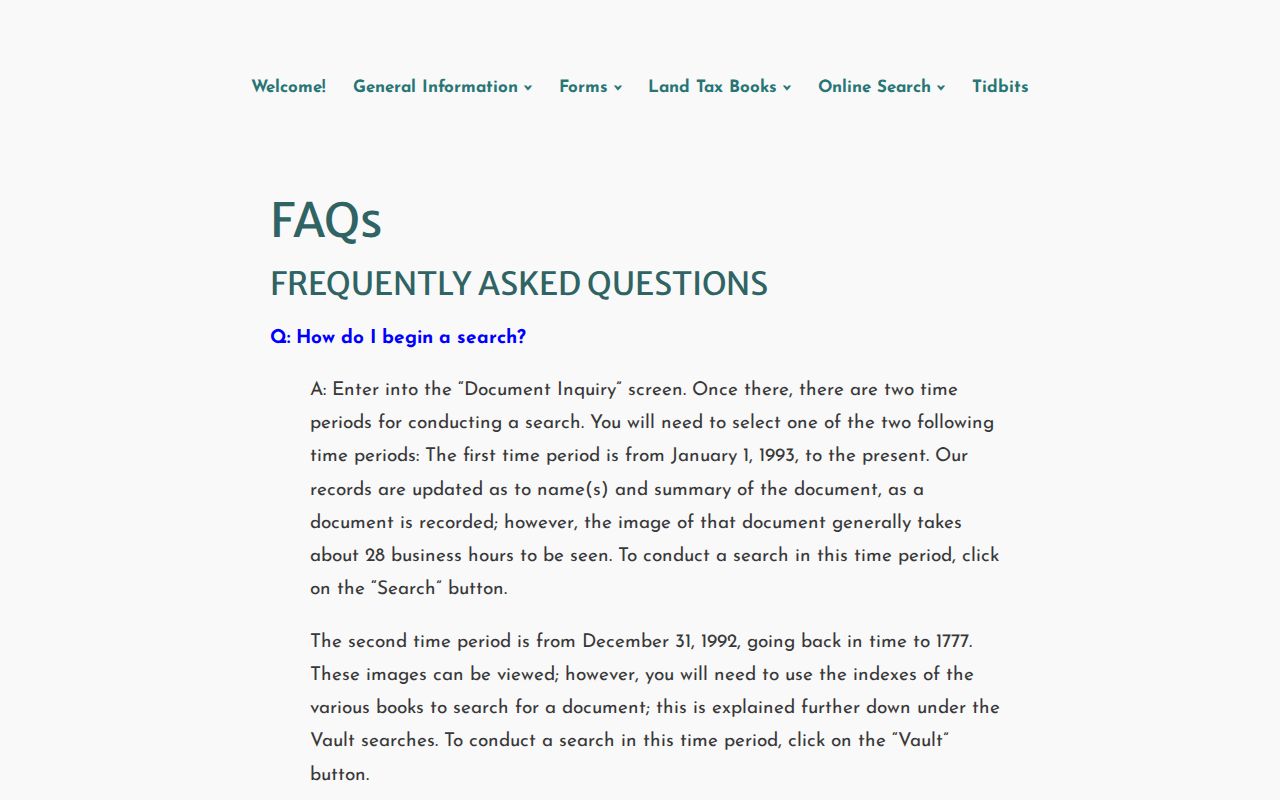
When tracking a recent filing, record both the index result and the date you searched for the deed image.
The Ohio County Vault Reaches Back to 1777
The historical Vault covers December 31, 1992 back to 1777. It is organized by book and page, not by a modern address box. Select the Vault and book type, then enter the reference you have. When the book and page are unknown, start with the index for that period.
The deed indexes come in three ranges: 1777-1935, 1936-1959, and 1960-1992. Each range keeps Grantor and Grantee books separate. Corporate parties sit in their own Corps. & Firms grantor/grantee index, an important clue whenever an LLC or company name appears in a deed record. Ohio County has no verified courthouse fire or land-book loss, so an empty search points to indexing, name form, or book-period issues rather than destroyed records.
The WV Archives finding aid lists Ohio County deed, trust-deed, survey, plat, court, will, tax, and lien holdings on microfilm. Use that catalog and Clerk guidance whenever a historical volume is not available online.
Read the Ohio County Grantor and Grantee Books in Order
The grantor conveys the land. The grantee receives it. To walk a chain backward, start with a deed where the current owner of record is the grantee, note the prior owner and prior-conveyance reference, then find that owner's own acquisition as grantee. Check that every instrument describes the same parcel. A matching surname without a matching legal description can lead you onto a different tract entirely in the deed records.
- Find the current owner's acquisition deed as grantee in the relevant index.
- Read the grantor and any prior-conveyance book/page reference in the instrument.
- Search that former owner as grantee to locate the deed by which the parcel was acquired.
- Repeat while comparing legal description, adjoining calls and parcel context.
- When the chain predates 1993, switch to the historical index period and Vault book/page search.
- Grantor
- The party conveying an interest in the instrument.
- Grantee
- The party named as receiving the conveyed interest.
- Chain of title
- The sequence of recorded instruments linking successive interests in the tract.
- Book and page
- The historical Vault reference used to open a volume location.
Ohio County Keeps Corporate Names in a Separate Index
The Clerk's historical system keeps grantor and grantee books separate. It also adds a distinct Corps. & Firms index. A corporate party may not appear where a person-name search suggests. Search the entity's exact recorded form and reasonable variants. Then confirm identity and status through the Secretary of State Business Organization Search. The state business file can explain which organization a deed names. But it is not a county land record and does not prove title.
Estate transfers create another break in the chain. The Clerk may index an appraisement, settlement, lodged will, or fiduciary deed. A will lodged after death is not viewable until probated, the county notes. When a conveyance seems to jump across a death, look for probate and representative authority. Do not assume a deed was skipped. West Virginia entity records are searchable through the Secretary of State Business Organization Search.
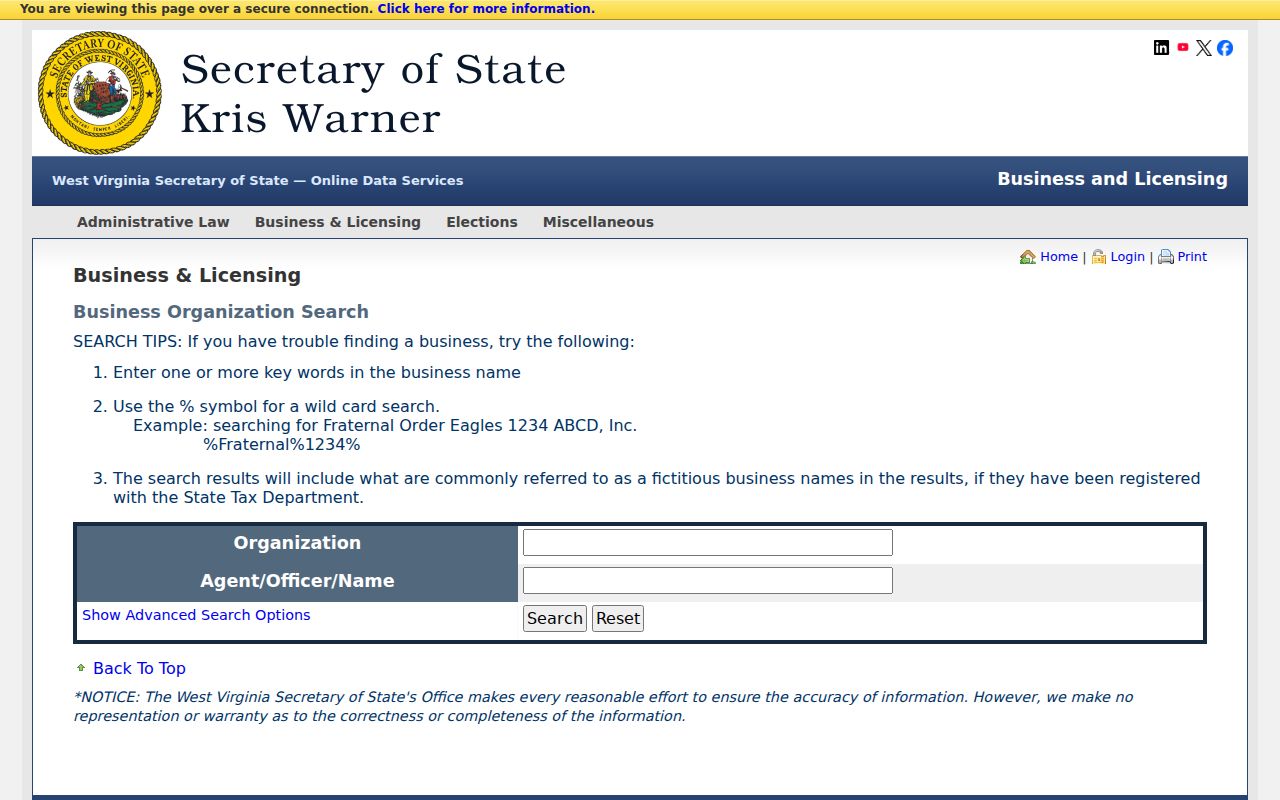
Keep the state's entity result separate from the Clerk's recorded conveyance. Note the exact names that appear in each record.
Ohio County Deed Exhibits and Later Releases Matter
A deed's legal description often points to a plat. The Clerk notes that plats may ride along as exhibits, indexed in the Deed Plat Index, or sit in separate Plat Books. Pull the related name and reference, then read the exhibit itself rather than trusting a text summary. A plat is a map that clarifies lots and subdivision layout. Still, it cannot replace a current survey.
Deeds of trust, liens, assignments, and releases are different instrument types that can all surface in one property trail. A later release or assignment can shift the picture. It may show who now holds a recorded security interest. Read the deed page alongside those later filings. That matters when the question turns on encumbrances. A lien's appearance in the index proves nothing by itself. It does not show whether the debt remains unpaid.
Ohio County Deed Copies Have Different Online and Counter Costs
Searching the index is free. Printing an online image costs money. The published online rate is $1.00 per page plus a processor fee of $2.00 or 2.5% of the copy cost, whichever is greater. Counter copies run differently. They cost $1.50 for a document's first two pages and $1.00 for each page after that. Rates can change, so confirm current terms on the Clerk's fee page before ordering. No complete certified-copy fee schedule appears online. The Clerk's online search FAQ explains image timing, historical search, and copy charges.
The counter is in Wheeling. You will find the land-record room at 1500 Chapline Street. The county's historic-property guide asks visitors to phone ahead and arrange an appointment before coming.
Request an Ohio County Deed Copy Through the Clerk
Open the indexed image whenever it is available. Confirm that every page, exhibit, and legal description belongs to the parcel you intend. Online copies carry a per-page print charge plus a processing charge under the county's current notice. The counter rate differs. Call the office before making a trip. Older Vault items can need staff help. The Clerk publishes no certified-copy fee schedule or mail-request process, so ask directly rather than assuming one exists.
For a chain-of-title question, record the book and page, instrument type, parties, execution or recording date, and the legal description. Then search later deeds, assignments, releases, liens, and estate filings under the relevant party names. One deed image proves the document was recorded. It cannot prove that no later instrument affects the parcel.
Recorded, not guaranteed. The Ohio County deed index shows documents recorded in the county system; it is not a title opinion, and unrecorded interests may exist. A title professional can perform the appropriate title search.