
Fields on the Ohio County Current Owner Record
The Assessor card labels its owner field Current Owner. That name sits beside the mailing and street addresses, district, map, and parcel number. It also appears with the account number, legal description, deed book and page, sales history, and the appraisal. Read them together. The companion fields tie the name to a specific parcel. They point toward the recorded deed. They do not prove occupancy, and they cannot promise the roll reflects the latest transfer.
| Current Owner | Name carried on the assessment roll; confirm with the Clerk. |
|---|---|
| Mailing Address | Tax-mail destination, which may differ from the parcel location. |
| Street Address | Situs location associated with the assessed land or building. |
| District, Map/Parcel, Account | County identifiers used to match the parcel across records. |
| Legal Description | Text clue for the actual tract, lot or subdivision. |
| Deed Book/Page | Recorded reference to verify in the Clerk system. |
| Sales History | History shown on the card; compare with the deed record. |
Owner of record is a tax-roll label, not a resident. The mailing and situs addresses differ. A tax bill can go somewhere other than the parcel itself. Treat the mailing field as part of the public record only. It is not an invitation to contact anyone about private matters.
How Current Is the Ohio County Owner Field?
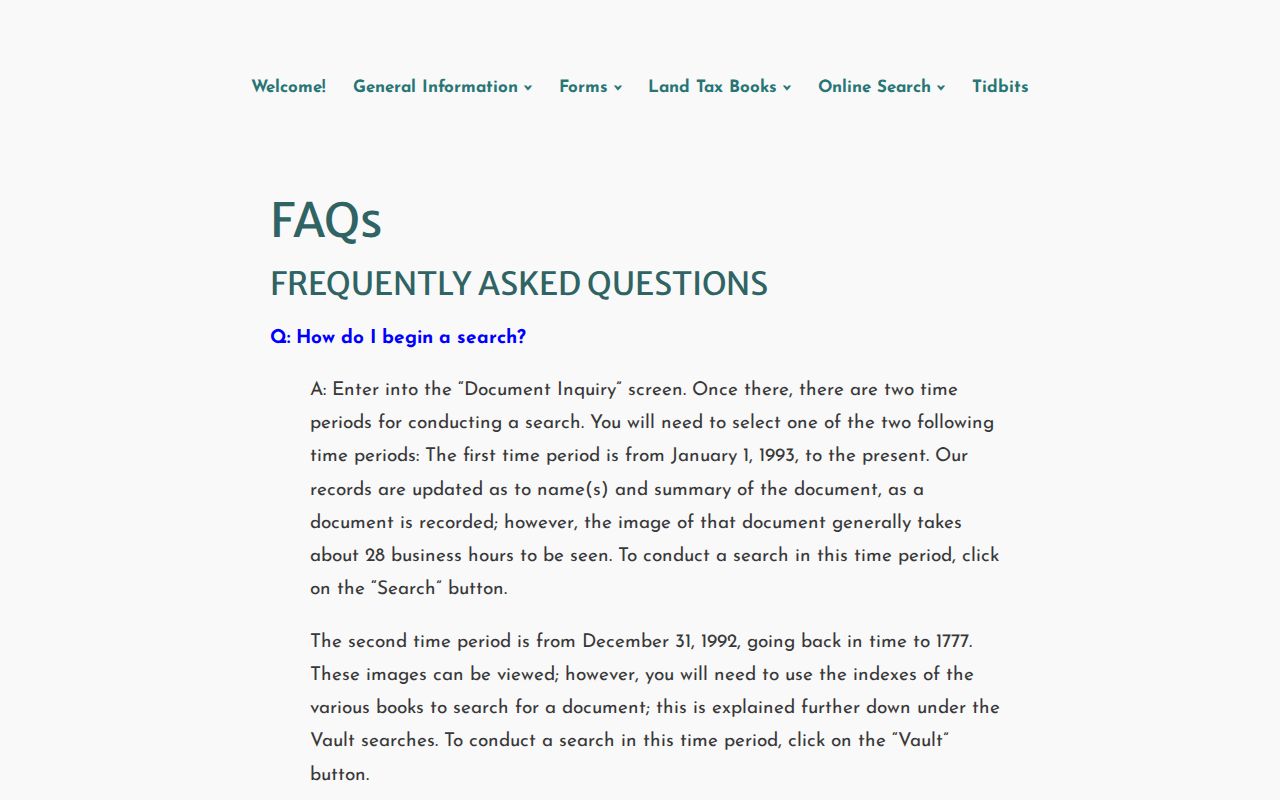
The county's Find a Deed guidance is plain. The Assessor's owner name is not updated on a regular basis. It may still name the prior owner. That makes the card a strong parcel locator. But it is a weak clock for a fresh transfer, since a deed can hit the Clerk's index before the assessment roll shows it. When a sale just closed, work both systems instead of trusting whichever label sounds newest. The Clerk reports that names and index summaries post as instruments are recorded. Document images, though, take roughly 28 business hours to appear. An index entry without its image deserves a second look after that window. Log the date of each property search. The next pass can then spot whether the deed image or the Assessor card has moved. The Clerk explains image timing in its online search FAQ.
Use both the recorded date and the search date when weighing a new deed against the current owner line.
Mailing Address and Situs Address Do Different Jobs
Each Assessor card carries a Street Address and a Mailing Address. The street address locates the assessed parcel. The mailing field shows where tax correspondence goes. That split helps identify property when the owner gets notices elsewhere, yet it says nothing about where that person actually lives now. When several cards share one owner name, match each situs address against the district, map, and parcel number plus the legal description. A Wheeling mailing label does not settle the municipal boundary, so confirm the parcel's city and county context in the GIS map. Some mailing addresses also fall under a confidentiality program. Never assume every owner entry exposes a private residence.
Ohio County Deeds Show Entity Vesting by Recorded Name
A company, trustee, or estate listed as Current Owner gives you the roll name. It tells you nothing more about the entity's authority. Pull the latest deed and see how the grantee was named. It also shows what interest was conveyed. The WV Secretary of State's business search can clarify a filed LLC or corporation. But the Clerk's deed records remain the source for the transfer itself. Some older corporate names only surface in the Corps. & Firms grantor and grantee index. An estate transfer may leave appraisements, settlements, or a fiduciary deed in the public chain. A will merely lodged with the Clerk stays out of public view until probate. So whenever the owner of record is an entity or a representative, check the present owner record against its filed instrument.
Verify an Ohio County Current Owner Against the Latest Deed
Let the tax roll identify the parcel. Then use the deed reference and the party index to confirm the recorded grantee. Match the legal description in the instrument to the card. Do not lean on the name alone. If the transfer is recent, note whether the deed image has posted. Also check whether the Assessor card still carries the former owner. Those two checks settle most questions.
- Find the parcel in the Assessor search and capture the Current Owner, district/map/parcel and deed book/page.
- Search the Clerk's modern index by party role and date, or use Vault if the deed predates 1993.
- Read the complete deed for grantee, vesting words, legal description and prior-conveyance citation.
- Compare that description with the card; record each search date and any pending image delay.
- Owner of record
- The name carried in a public ownership or assessment record.
- Vesting
- The form in which the deed names the grantee or interest holder.
- Registered agent
- A state business-file contact for an entity, not necessarily a property occupant.
Current Owner Does Not Mean Current Occupant
A tax-roll owner name and a deed grantee are recorded roles. Neither tells you who is inside the property today or who may lawfully enter it. The mailing address can differ from the situs. Tax notices often travel to another destination. West Virginia's Safe at Home program offers address confidentiality to eligible participants. Public record fields must never be used to defeat that protection. For the wider address-to-owner method, see the Ohio County ownership lookup guide. This page stays focused on the present owner record and how often it updates.
Use the Ohio County Current Owner Record for Property Questions
The current owner record answers real property questions. It confirms a parcel file. It tracks a recent transfer. It also routes a formal notice about a specific property. It is not a verified occupant list. It is also not a title opinion. Public owner data should never be used to intimidate someone or show up at a person's home.
An old-looking owner field deserves patience. Treat the displayed name and the deed grantee as two separate dated facts. The Assessor's card carries the tax mailing address, situs address, legal description, parcel key, and sale history. The Clerk's recorded instrument names the actual parties and holds the conveyance language. A mismatch can simply mean an update delay. It can also mean a trust or entity name, an estate transfer, or a changed parcel description. Compare both sources before drawing a conclusion.
For verification, note the date you searched. Record the source portal too. Add the tax year or recording period, and the book/page or account number shown. If a recent recording image has not appeared, that is normal: the Clerk states images take about 28 business hours to display after recording, while the summary updates sooner. Reach out to the Clerk or Assessor with that reference. Do not assume a stale card needs correcting.
Always check the deed's grantee against the parcel description on the Assessor card. A deed may convey only a partial interest or one tract among several. A matching name alone proves little. When the card lists multiple lots, record each district, map, and parcel entry. Then use the instrument's exhibits or plat reference to pin down exactly which land the filing covers.
Lawful use. Use the Ohio County record for due diligence and property matters. Do not use any owner name or address to stalk, harass or harm another person.