
Ohio County Property Tax Records Separate Value from Payment
Two offices, two jobs. That is the core of Ohio County property tax records. It helps to know the split before you search. The Assessor's card organizes the parcel, the owner of record, the address, and the assessment. The Sheriff's search returns the tax account and ticket details. Those details let you review a bill and whether it was paid. Read the tax year alongside every result so one period never gets mistaken for another.
| Field | What It Shows | Where |
|---|---|---|
| Assessed value | Assessment record and value fields for the parcel. | Ohio County Assessor |
| Appraised or cost values | Viewer detail may show appraised values and cost information. | WV Property Viewer |
| Taxpayer and account | Name and account keys used to find a tax ticket. | Ohio County Sheriff |
| Tax year, ticket and suffix | Separates a bill record by period and ticket. | Ohio County Sheriff |
| Real/Personal and Paid/Unpaid | Search choices and payment-status fields visible on the form. | Ohio County Sheriff |
An assessed value serves the tax roll. A tax bill reports a billed amount and its status for one tax year. A recorded consideration belongs to a deed, not to the tax side at all. The county's search pages keep these figures separate on purpose. For a sale figure, inspect the deed and its consideration entry. For the bill, use the Sheriff ticket.
Search the Ohio County Sheriff Tax Form by Ticket or Parcel
The Sheriff's form offers several keys. You can search by taxpayer name in last-name-first order. Account number, tax year, ticket and suffix, district, map and parcel, and sub-parcel work too. The form also separates Real from Personal property. It can narrow results to Paid or Unpaid status. Treat these as filters, not answers. Confirm any result with the parcel key and tax year. That way the record matches the land and period you mean.
| Search key | How to use it | Check beside it |
|---|---|---|
| Taxpayer name | Enter surname first, then first name. | Compare the parcel and ticket. |
| Account number | Use the county account identifier. | Confirm tax year and property class. |
| Ticket and suffix | Narrow to a bill record. | Retain both values with payment status. |
| District/map/parcel/sub-parcel | Match the Assessor parcel key. | Check parcel parts exactly. |
| Tax year and status | Choose the relevant period and Paid or Unpaid filter. | A status is limited to that ticket/year. |
The tax office sits at 1500 Chapline Street in Wheeling, and its listed number is 304-234-3688. Its public search stands apart from the Assessor portal. To verify an amount or status, check the bill itself for the record you selected.
Use the Assessor Card to Tie a Tax Ticket to Land
When the Sheriff search needs a parcel key, start at the Assessor's address or owner search. Its fields cover owner name, parcel address, account number, and tax district. You can also search by map and parcel components, property type, legal description, and deed book and page. The card that comes back has separate Current Owner, mailing address, and street address fields. It also includes assessment and sales-history details. The Current Owner line is a tax-roll field. The Clerk warns it is not updated on a regular schedule. A tax ticket may carry an assessment name that differs from a recently recorded deed. Keep both names, and compare the deed reference. Resist turning a bill result into a title conclusion. The Assessor offers its search online (Ohio County Property Record Search).
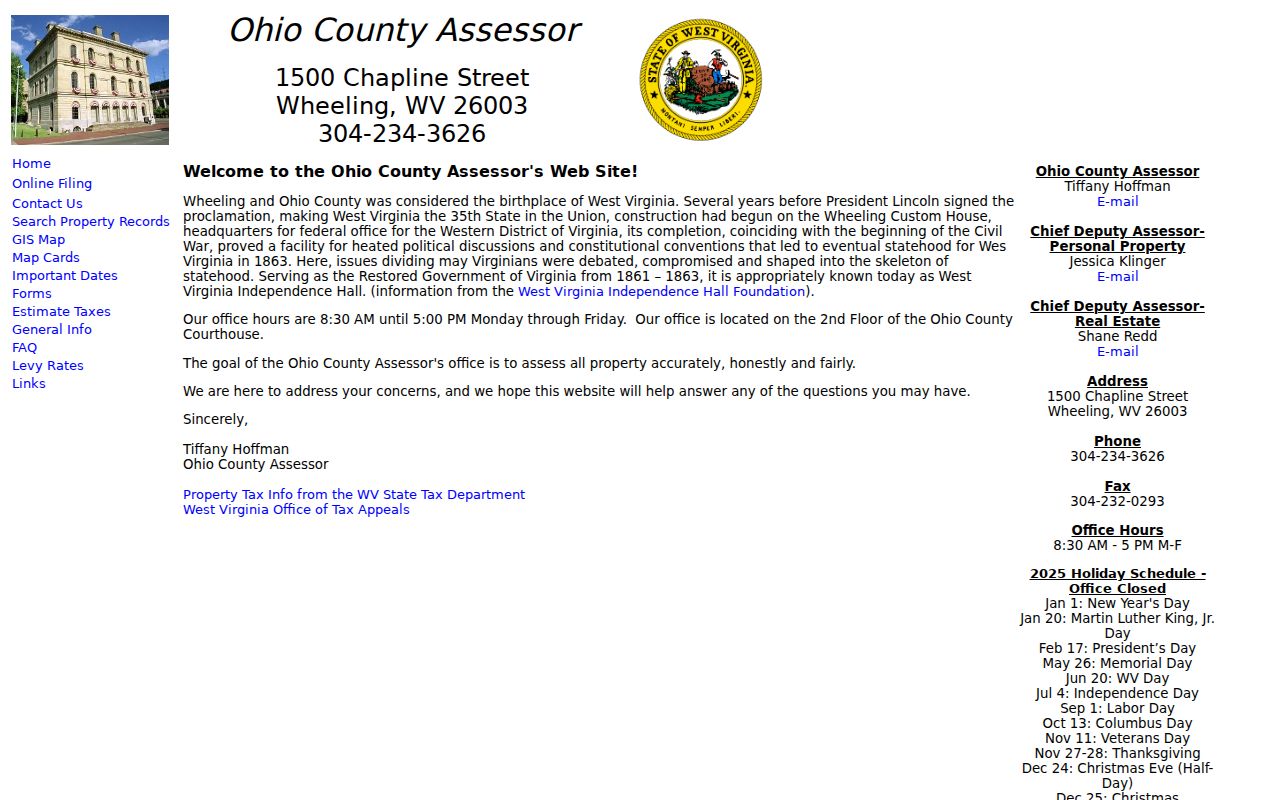
Carry the account or parcel identifier from the county card straight into the tax bill lookup.
Follow an Ohio County Tax Bill from Parcel to Status
Start with the situs address or a parcel reference you already hold. Write down the matching district, map, and parcel. Then search the Sheriff by that key. You can also use ticket and account details from an earlier bill. A payment record tells you only whether the ticket is paid or unpaid. It covers just the chosen year. It proves neither a deed transfer nor a released encumbrance.
- Use the Assessor to identify the county district, map/parcel and account.
- Open the Sheriff search and enter the taxpayer, account, ticket, parcel and tax year information available.
- Read Real/Personal and Paid/Unpaid status with the same ticket and tax year.
- Compare a bill name with the Assessor card and newest Clerk deed when a transfer is part of the question.
- Assessed value
- The value recorded for assessment purposes; it is not the sale price.
- Tax ticket
- A bill record identified by tax year and ticket details.
- Paid or unpaid
- Status shown for the selected tax record, not a title determination.
- Assessment versus bill
- The roll value and the Sheriff account answer different questions.
Ohio County Land Tax Books Add a Longer Record View
The Clerk's Land Tax Books run from 1884 to about ten years ago. The recent decade is handled through WVPropertyTaxes. For older property research, these books can place land in an earlier tax period. They sit nicely beside a deed index result or a historical map. They are not a substitute for deeds, though. They cannot establish a full chain of title. Record the year, name, and parcel description with each note. Older entries often describe a tract, neighborhood, or former owner instead of a modern street address. Use the Assessor's legal-description field and GIS context to test whether the land is the same. Confirm any match against the Clerk's recorded description before you rely on it.
Do Not Assume an Exemption from the Ohio County Card
Assessment and tax records may show exemption or taxable-amount fields. But the card alone will not settle an exemption question. A blank or unfamiliar field is not a decision about anyone's qualification. Ask the Assessor which form and year apply. Turn to the state property-tax law or the office itself for current instructions. The separation matters whenever you compare value with tax. A parcel's assessed value is one step. Any adjustment to the taxable amount is another. The final bill is a third. These are three distinct steps. The Assessor's card is a starting record. The Sheriff ticket is the source for the bill and its paid or unpaid entry. Neither one supports a claim about market price.
Confirm an Ohio County Assessment Appeal Date with the Assessor
An owner who disputes an assessment should call the Ohio County Assessor for the current appeal calendar, the accepted filing method, and review-board instructions. Do not rely on a past date or a generic West Virginia calendar. Deadlines change. Keep the parcel number and assessment year handy whenever you ask.
Ask the Assessor which value year and property class the notice covers. Ask how to get the underlying property card. Also ask what supporting material the current procedure accepts. The county publishes no countywide exemption list, deadline, or eligibility checklist, so confirm any exemption rule and filing route directly with the office. Never assume an exemption is automatic or that one statewide form fits every parcel.
For older tax years, the Clerk's Land Tax Books run from 1884 through the period ending ten years before the current roll. More recent tax information flows through the West Virginia property-tax system. A historical land-book entry and a current Sheriff ticket are different records. Note the tax year, parcel number, and ticket suffix so a clerk can pull the same assessment or bill you saw online.
When comparing amounts across years, keep three things apart: assessed value, billed tax, and payment status. Each tax bill reflects its own year and ticket. It is not a property appraisal or a deed. If the owner of record on a ticket differs from a recent conveyance, follow the transfer through the Clerk's instrument index and ask the relevant office about its update timing.
The Sheriff search splits Real and Personal property and offers a Paid or Unpaid status filter. Save the tax year, ticket number, and suffix with any result, because a different ticket on the same account can carry a different status. When a search returns several entries, compare the district, map, and parcel numbers plus the property class rather than picking by taxpayer name.
Each record serves a different point in the trail. The Assessor card, the Clerk Land Tax Book, the statewide tax page, and the Sheriff ticket answer different questions. An old land book can show the name carried on a past assessment, yet it cannot replace a later tax ticket or a recorded transfer. For payment questions, verify the exact ticket with the Sheriff. For deed questions, follow the County Clerk reference.
Appeal window. No current Ohio County appeal deadline was verified in the available research. Contact the Assessor at 304-234-3626 for the applicable date and required filing steps before relying on a prior-year schedule.