
Build an Ohio County Former-Owner Timeline from the Right Era
Ohio County's deed trail reaches back to 1777. The search route changes with the era. The Clerk's current index, the older Vault books, Land Tax Books, and local history collections each contribute different evidence to a property search. Deeds prove the transfers. Tax books, maps, and directories explain how a parcel and its address were once described, so treat them as context rather than as title instruments themselves.
| Source | Years It Covers | Where Held | What It Shows |
|---|---|---|---|
| Document Inquiry | January 1, 1993 to present | Ohio County Clerk | Modern party, role, type, date and index summary. |
| Vault and deed indexes | 1777 through 1992 | Clerk's historical books | Grantor/grantee references and deed book/page. |
| Land Tax Books | 1884 to ten years ago | Clerk's online books | Historical tax context by year, not a conveyance. |
| Wheeling directories | Holdings begin in 1839 | Ohio County Public Library / HeritageQuest | Residents and businesses at named addresses. |
| Maps and atlases | 1853, 1871, 1901 and 1918 holdings | Ohio County Public Library | Historic lots, footprints and owner clues. |
A modern transfer starts with the present card and Document Inquiry. Earlier deeds need the index period covering the date. Then open the Vault by book and page. A clue tied to a Wheeling address or building calls for directories and historic maps, but add them only after the deed references are settled. The Assessor's legal description and the Clerk's instrument together decide whether a historical map depicts the same parcel. When descriptions disagree, trust the recorded deed.
Wheeling's 1873 Street Change Can Hide Former Owners
Wheeling's addresses changed on July 11, 1873. Street names changed too. A deed or directory from before that date may carry a street label and house number different from the one on today's parcel card. Searchers who use only a modern address can miss a valid older record, and the Ohio County Public Library's old/new street-name handout helps crosswalk the labels before you confirm the lot against the Clerk's legal description.
Keep both address forms in your notes. Give each a date and source. A map can show whether an old street line and lot align with the current parcel, though it remains context rather than proof of title. Once the lot is matched, trace former owners through the index by party and book reference.
The library's local approach to chain-of-title work appears in its guide to Ohio County historic property research. Use it as a map. Deed records still decide ownership.
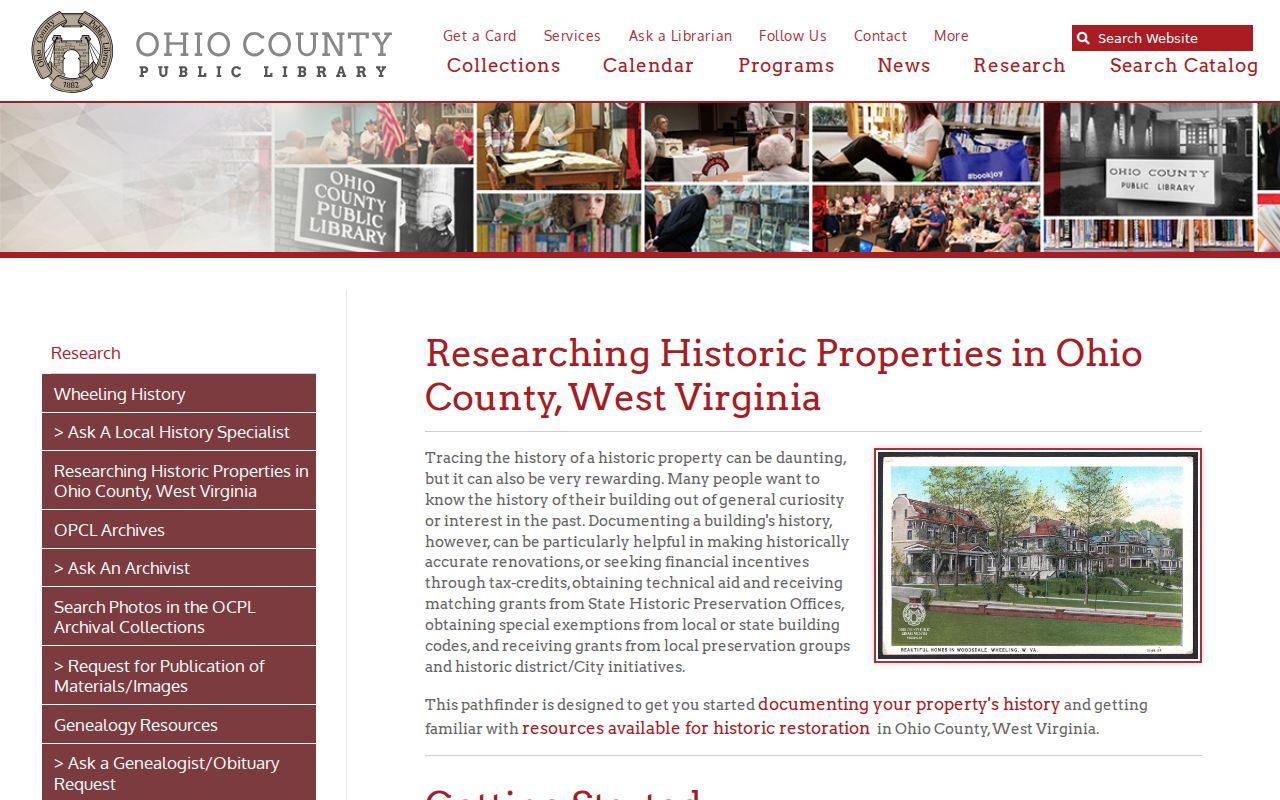
Crosswalk first, then verify the parcel against the deed description.
Ohio County Historical Deed Indexes Have Three Periods
The pre-1993 deed index covers three periods: 1777–1935, 1936–1959, and 1960–1992. Each period has a Grantor and a Grantee index. Corporations and firms occupy a separate Corps. & Firms grantor/grantee set, so pick the date range first and choose the party direction that fits the transfer.
An owner who conveyed land shows up as grantor on the outgoing deed. Search that name as grantee in the earlier period. Deed text often cites a prior book and page. That can shorten the path. Variant name forms and common surnames make a legal-description check essential before any entry joins the chain.
Walk the Ohio County Chain from Grantee Back to Grantor
Each deed names one transfer and one prior step. The buyer or recipient is the grantee; the party conveying the interest is the grantor. Read the prior-conveyance recital. Then check the legal description. If a lot turns into a larger tract, follow the acreage and adjoining calls rather than trusting a street address.
- Find the most recent deed with the present owner as grantee.
- Record grantor, date, book/page and the full land description.
- Search that grantor as a grantee to find an earlier acquisition deed.
- Follow each prior reference and check that the land description still matches.
- Move into the relevant older index period and Vault books when the deed predates 1993.
- Grantor / grantee
- The conveying party and recipient named in an instrument.
- Chain of title
- The connected sequence of recorded transfers for a parcel.
- Legal description
- The text that identifies land when a street address is absent or changed.
Wheeling Directories Add Occupants, Not Deed Owners
The Ohio County Public Library's Wheeling City Directories date to 1839. The Wheeling Room collection never circulates and is reached through the Reference Desk. Cardholders get remote access to many directories through HeritageQuest. Alphabetical listings identify a person or business. Reverse-street sections move from street and number to occupant, a feature most directories carry beginning in 1898.
Directory entries shine when a former owner survives only as a house story. They work the same way for a changed address. They name occupants, not owners. A business listing works the same way. Pair the entry with the 1853, 1871, or 1901 map before pressing further. Then verify ownership through the Clerk's deed sequence.
The library explains year and index navigation. Its guide covers Wheeling directories in HeritageQuest.
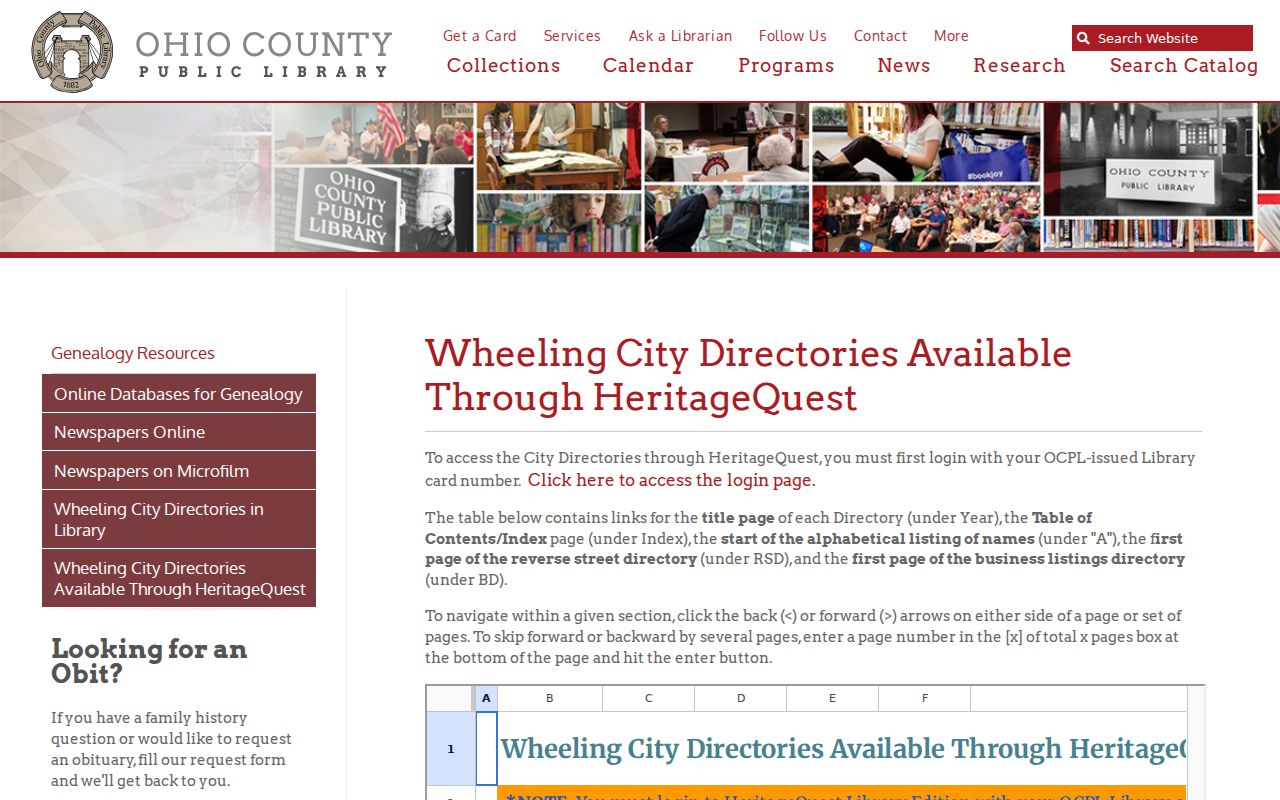
Let the directory point you to an address and year. Then follow the record trail back to a recorded instrument.
Probate and Fiduciary Deeds Explain a Gap in Past Owners
A tidy sale-to-sale chain can stall. An owner may have died, or the land may have passed through an estate. Ohio County Clerk estate files may hold a recorded probate paper, an appraisement, or a settlement. A fiduciary deed names the representative. That is the person who conveyed the property. A will merely lodged after death is indexed but not viewable on the county page until it is probated.
Search the estate and deed indexes under the person's name and the representative's role. Estate names may need the Corps. & Firms index. When an older book and page are cited, open the Vault record and compare its legal description with the preceding transfer. A name-only jump proves nothing.
Ohio County Ownership Records Reach Back to 1777
Ohio County's land records start in 1777, and its Document Inquiry reaches back to 1993. The gap between them reflects an online search change, not a records disaster. No courthouse fire or land-record loss marks the county's history. So before assuming documents vanished, check the basics. Spelling, index period, party role, book reference, and historical address cover most of it. Empty results usually trace to one of those.
Older property history lives elsewhere. The WV Archives finding aid catalogs county deeds, trust deeds, surveys, plats, court records, wills, and tax and lien holdings. All of it sits on microfilm. The Ohio County Public Library holds directories, maps, Sanborn sheets, and newspapers. Each can show how a parcel was described or occupied. Still, the recorded deed sequence anchors any former-owner search.
Match the record to the question. A deed names who transferred land. A tax book tracks assessment years. A directory may name an occupant. A map may place a lot or building in time. These property records overlap, but they answer different questions. Keep each source date beside every name. Treat an address match as provisional until the legal description agrees with the parcel you trace.
Lawful use. Research the history of a house, parcel or recorded transfer for legitimate property and civic purposes. Do not use former-owner records to track, harass or harm a living person.